
Where to find whitetail deer, which map and habitats hold them, and the setup that produces clean kills.
Way of the Hunter 2 Whitetail Location Guide
Northern white-tailed deer live only in New Laurentia, the 100 km2 North America reserve, and nowhere in Kilimaya Reserve. Find them by reading tracks between need zones, sending your dog to locate active life zones, and checking the need-zone layer on the community interactive map before you walk. Bring a rifle caliber approved by the in-game encyclopedia, shoot broadside at moderate range, and let the dog follow the blood trail after the hit.
- Whitetail is one of 15 New Laurentia species at version 1.0, present since the March 26, 2026 Early Access launch.
- No charging behavior exists for whitetail or any other New Laurentia species, so you can stalk on foot without planning an exit route.
- No developer source publishes whitetail need-zone times or fixed hotspot coordinates, so treat any timetable you see elsewhere as player observation.
Whitetail Lives Only in New Laurentia
The developer roster is explicit: version 1.0 ships 28 species, with 15 in New Laurentia and 13 in Kilimaya Reserve, and the northern white-tailed deer sits on the New Laurentia list. It was one of the 13 species available at the Early Access launch on March 26, 2026, which means it has been huntable longer than the pronghorn and wild boar that joined the same map in Update 0.3.0. If a page sends you to Africa for whitetail, it is describing the wrong game or the wrong deer. The full 28-animal roster shows both maps side by side so you can confirm this before planning a trip.
Official source: Way of the Hunter 2: FAQ, Nine Rocks Games — "Version 1.0 ships with 28 species across Laurentia and the Kilimaya Reserve."
New Laurentia itself is 100 km2 of Rocky Mountain ground, the same footprint as Kilimaya, with the Hearth and Hunt Headquarters hub sitting apart at 16 km2. The maps and reserves breakdown compares all three and explains why so many older pages still claim the game has a single map. For whitetail purposes the takeaway is simple: every step of this guide happens in New Laurentia.
How to Find Active Zones Instead of Wandering
Whitetail do not walk fixed loops you can memorize. The developer FAQ states that tracks are dynamically created between need zones, and that spooked animals generate temporary dynamic tracks as they move across the map. A trail you find in the morning is evidence of one journey between two zones, not a permanent road the herd commutes on. The tracking, wind and dog guide works through what each kind of sign means in this system.
Put that mechanic to work in three steps. First, glass from high ground and look for fresh sign rather than sprinting toward the last place you saw a deer, because a sprint turns a track into a spooked run and the animal leaves the zone. Second, send the dog to search for signs and locate active life zones instead of walking every meter yourself. The FAQ credits the dog with three jobs: searching for animal signs, helping locate active life zones, and tracking wounded animals along blood trails. Third, open the Shackmaps New Laurentia interactive map before you leave the lodge. Need zones and campsites exist as map layers only on third-party tools like this one, marked by players, and it is currently the only interactive map for the reserve.
A trail that stops means the animal reached the zone it was heading for, so cast back along your own line before widening the search. A fresh trail crossing your approach means something moved just now, so follow it only if you can confirm the species from the sign.
Which Ground to Check First
No official source publishes a per-species habitat breakdown for New Laurentia, so this section is honest about what is confirmed and what is not. The developers have published exactly six New Laurentia place names through patch notes: Lake Sasquatch, Jackalope Cordillera, Mishipeshu Swamp, Wetiko Foothills, Kermode Plateau and Thunderbird Muskeg. Two of those are water country by name and by fix history. Lake Sasquatch carries a pollution-clearing challenge and a tunnel link, while Mishipeshu Swamp had water texture and missing-lake fixes in Update 2. Water edges are where drink zones sit for every species, so opening your search around the named lakes and swamps is the highest-percentage play the official record supports. The New Laurentia guide lists what each of the six places holds according to the patch log.
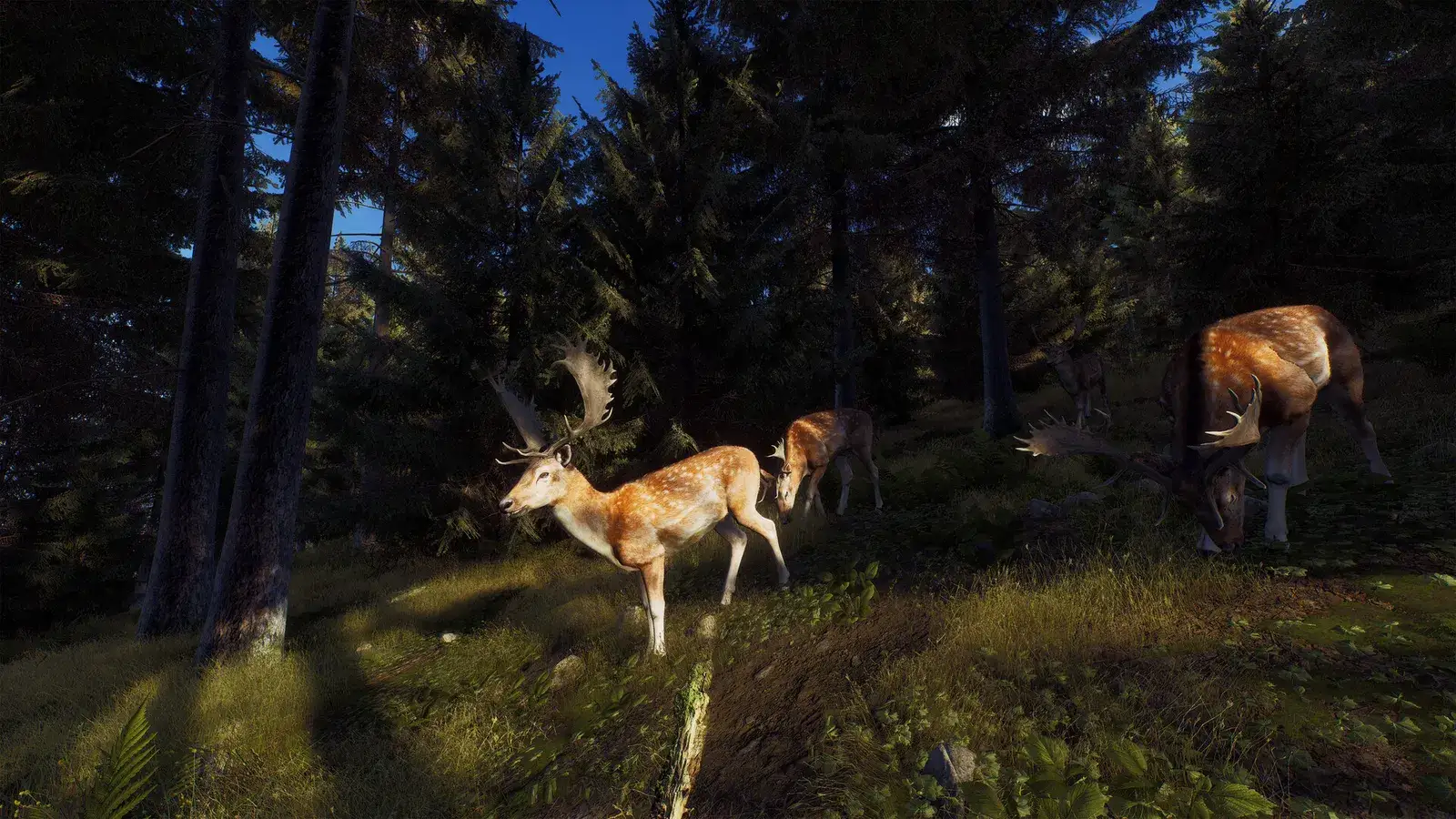
Beyond that, do not trust fixed coordinates. There is no public gazetteer, and per-species need-zone times, activity windows and territory maps for New Laurentia have never been published by Nine Rocks. The developers confirmed the dynamic-track system instead of fixed routes, which is itself the reason static hotspot maps go stale fast. Check the need-zone layer on the interactive map for player-marked whitetail zones, verify them with your dog on arrival, and move on when the sign is cold. Anything promising exact spawn points is guessing.
Weather planning helps at the margins. Since Update 1.1 you can set a long-term forecast per hunting ground from the in-game menu, but the change takes effect after 48 in-game hours, so set it before the session rather than during. One thing weather does not yet do is change how well animals see and hear you. The developers list that as planned work, not a live mechanic, so pick weather for visibility and comfort, not for a stealth bonus the game does not apply.
Setup That Produces Clean Kills
Whitetail reward a medium-power rifle handled patiently, not a cannon. Open the in-game encyclopedia entry for the species and use only a caliber it approves, because the wrong ammunition ruins the trophy rating and leaves wounded animals in thick cover. The Steam store page lists the full weapon sandbox, and loadout math including the magazine-group caps is worked through in best weapons and ammo.
Three gear choices matter more than raw power. First, fit a suppressor. Update 1 credits suppressors with reducing animal alertness and preventing nearby herds from spooking, which is a documented system effect rather than flavor. Second, shoot broadside at moderate range and wait for a standing animal instead of forcing a long shot at a walking one. Ballistics and damage remain subject to balance adjustments, including how far animals run after being shot and how much blood they leave, so a clean angle beats a heroic distance every time. Third, bring the dog and actually deploy it after the hit. Blood-trail tracking is one of its three documented jobs, and the dog improves through bonding and use, becoming more obedient and reliable over time. Advanced dog training is still a post-launch update, so reliability today comes from the number of hunts you take it on.
Whitetail cannot charge the player. The only three species with implemented charging behavior, southern lion, common hippopotamus and Cape buffalo, all live in Kilimaya. The real penalty for a bad shot here is a long blood trail, a lost animal, and a damaged rating, not an attack.
Herd Management and Trophy Notes
Whitetail are worth managing, not just shooting. Restoration work on the reserve, repairing habitats, removing pollution and clearing invasive species, directly impacts animal fitness and population potential according to the Update 1 announcement, and fitness feeds the trophy star rating alongside age. The developers state they want to support herd management as much as possible, and the practical loop is straightforward: glass the herd with binoculars, read age and fitness from animal analysis, remove low-fitness animals first, and give the herd time to age up before returning.
Official source: Update 1 Is Out Now, Steam announcement — restoration efforts "directly impact animal fitness and population potential."
Two trophy facts shape expectations. First, antlers in this game are procedurally generated per animal rather than assembled from preset models, so no two racks are alike. Second, the rare tiers above the standard rating do not exist yet: non-typical mule deer trophies were still being polished at 1.0, superior and mythical trophies are in development, and the broader hunt rating rework is still coming. Whitetail sit at the center of this work. The developers ran a dedicated Community Feedback Round on white-tailed deer antlers and trophy appearance in August 2026, which is why this species is the one most likely to receive new trophy content first. Until that ships, an honest reading is that your best whitetail today is a mature high-fitness buck, not a rare-tier rack. The full tier status is tracked on the trophies and ratings page.
One save-age trap catches returning players. Update 2 raised base fitness across every species for better trophy distribution, with fewer animals spawning at the lowest rating, but the change applies to new saves only and existing saves never received it. If your whitetail keep scoring low on an old save, that is the likelier explanation than bad luck. The patch history is summarized in the Update 2 notes from THQ Nordic.
FAQ
Can I find whitetail deer in Kilimaya Reserve?
No. Whitetail are a New Laurentia species only. Kilimaya holds 13 African species such as greater kudu, blue wildebeest, lion, hippopotamus and Cape buffalo, and none of them is a deer.
What is the best time of day to hunt whitetail?
No official activity window has been published for any New Laurentia species. Any timetable you see is player observation, not developer data. Hunt the need zones when sign is fresh instead of planning around a fixed clock.
Which caliber should I use for whitetail?
Whatever the in-game encyclopedia approves for the species. Check the entry before buying ammunition, because the wrong choice damages the trophy rating and wounds animals.
Do whitetail attack the hunter?
No. No New Laurentia species has charging behavior at version 1.0. Only the southern lion, common hippopotamus and Cape buffalo can charge, and all three live in Kilimaya.
Why are my whitetail trophies always low rated?
Age and fitness drive the star rating. If the save predates Update 2 from May 2026, it never received the base-fitness increase, which applied to new saves only. On a fresh save, focus on mature high-fitness bucks and manage the herd upward.
Related Guides
- New Laurentia Guide: North America Map, Habit Zones and Game — the reserve whitetail live in, with all six named places and the species roster.
- Way of the Hunter 2 All Animals: 28 Species by Map — confirms which map holds whitetail and what shares the ground with them.
- Way of the Hunter 2 Tips: Tracking, Wind, Calls and Your Dog — the full loop for reading tracks, using the dog, and setting weather.
- Way of the Hunter 2 Trophies: Procedural Generation and Rare Ratings — what your whitetail rack is actually scored on today.
- Best Weapons and Ammo After the Ammo Change — loadout caps and suppressor choices for a clean whitetail setup.
More Way of the Hunter 2 Guides
Kilimaya Reserve in Way of the Hunter 2: the 100 km2 Africa map, its 13 species, which predators can charge you, and how to hunt hippo and buffalo safely.
Way of the Hunter 2 known issues after launch: the demo config fix for broken resolution settings, plus how to report a bug.
All 3 Way of the Hunter 2 maps with exact sizes: New Laurentia and Kilimaya at 100 km2 each, Hearth & Hunt at 16 km2. What each holds.
How to play co-op in Way of the Hunter 2: how to invite a friend, open a lobby, join a session, and the 2-player limit that trips people up at launch.
New Laurentia in Way of the Hunter 2: the 100 km2 North America map, its 15 species, elk and moose behaviour, need zones, tracks and hunting pressure.
Way of the Hunter 2 update 1.1 summary: weather forecast, inverted look, controller deadzone fixes, what is still broken, and how to report bugs.
Way of the Hunter 2 costs $39.99 or $59.99 deluxe. What the 8-DLC Season Pass adds, what Heirloom Pack includes, and how game 1 owners save.
Way of the Hunter 2 Season Pass: 8 DLCs in year one, $34.99, release window, what is inside right now, and the three statues that prove it worked.