
The best skills to unlock first, how to earn skill points, and which upgrades help tracking, stealth, and shooting.
Way of the Hunter 2 Best Skills Guide
Spend your first skill points on tracking and detection, then stealth and quiet movement, then shooting steadiness, and grow your dog on every hunt beside them. Points are scarce and cannot cover everything, so information skills beat damage skills early: finding more animals fills more tags than a slightly steadier crosshair. This page reflects Version 1.0 (29 September 2026) plus Update 1.1, checked on 10 October 2026.
- First: tracking and detection skills that show more sign and life zones.
- Second: stealth and movement skills that let you close distance unheard.
- Third: shooting steadiness for breath control and wobble reduction.
- Always on: dog work, because the dog improves through bonding and use at no skill-point cost.
How you earn skill points and what they buy
One honest warning first: Nine Rocks Games has not published a full skill tree list, perk names, or point totals for Way of the Hunter 2 anywhere in the 1.0 FAQ, the launch announcement, or the Steam store page. Anything quoting exact tree names or point costs as official fact is guessing. What follows separates confirmed facts from player-reported Early Access detail.
The confirmed part is thin but useful. The developer confirms your dog has developable skills, and that the dog improves through bonding and use, becoming more obedient and reliable over time. Advanced dog training arrives in a post-launch update, and extra dog breeds are not part of 1.0. That makes the dog the only progression line with a documented rule: use it and it gets better.
Official source: Way of the Hunter 2: FAQ | Nine Rocks Games (28 September 2026) — dog search, life-zone location, blood-trail tracking, and growth through bonding and use.
The player-reported part comes from the Early Access period. In a July 2026 Steam discussion, players described a point-buy system with roughly thirty buyable skills but only around fifteen total skill points, plus free respecs with no penalty. Treat every number in that sentence as community-reported, not official: it predates the 29 September 2026 launch, and launch builds can and do change progression tuning.
Official source: Skill points discussion | Steam Community — player reports on point scarcity and free respecs during Early Access, not developer statements.
For contrast, the original Way of the Hunter used no point-buy system at all: its perks unlocked by completing tasks in play, such as landing vital hits with a rifle family or covering distance on foot. Way of the Hunter 2 moved toward spendable points, so habits from the first game do not transfer. If free respecs survive into your build, use them aggressively; if a patch adds a cost, the priority order below still holds, because it ranks skills by how many hunts each one improves.
Player reports from Early Access say respecs cost nothing, which makes an early tracking build zero-risk: bank detection first, refund later into shooting once you know your main weapon. Recheck the menu after each patch, because a respec cost can appear without warning.
Pick tracking and detection first
Tracking skills earn their place because of one confirmed mechanic: tracks are dynamically created between need zones, and spooked animals generate temporary dynamic tracks as they move. You are not following a fixed path; you are reconstructing a journey between feeding, watering, and resting areas. Anything that shows sign earlier, from farther away, or with more detail converts directly into animals found per hour.
Prioritise in this order: sign detection range first, track detail second, life-zone location third. Detection range means fewer blank walks. Track detail means faster reads on species, direction, and freshness, which decides whether you commit or move on. Life-zone location pays off once you hunt a target species deliberately rather than opportunistically. The hunting tips page explains how to read a trail between zones, and the beginner guide covers the high-contrast sign setting that stacks with any detection skill.
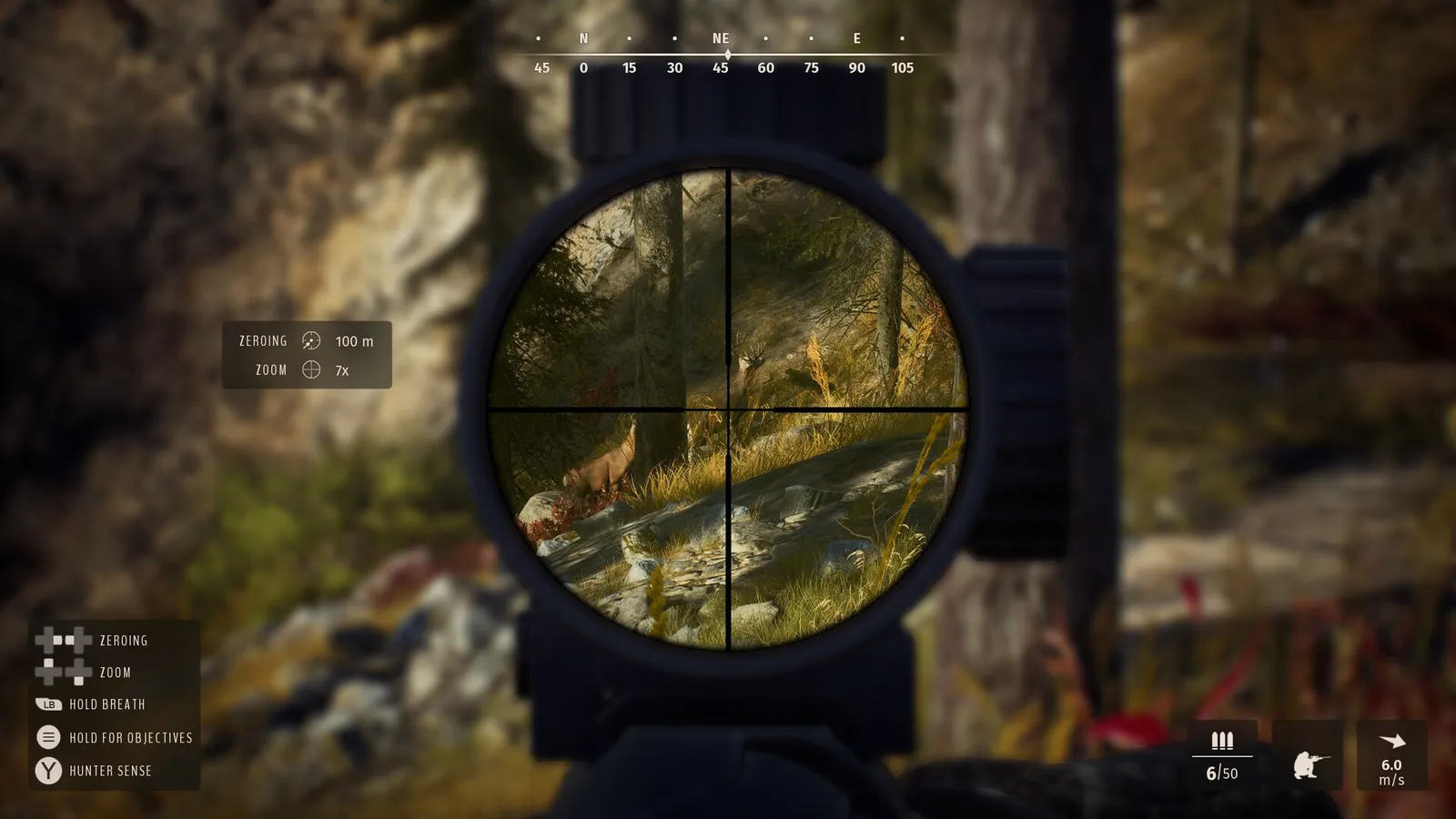
The dog belongs in this section, not the shooting one. It searches for animal signs, helps locate active life zones, and tracks wounded animals along blood trails, and none of that spends your skill points. Send it on sign search before you walk over evidence yourself, and deploy it down every blood trail after a hit. New hunters lose more animals to failed recovery than to missed shots, and the dog is the cheapest fix in the game.
Take stealth and movement second
Stealth ranks second because the game's pace punishes noise. Closing distance at a run turns a track into a spooked run, and a spooked animal's temporary track is a worse lead than the need zone it was heading for. Skills that quiet footsteps, reduce visibility while crouched or prone, and soften movement through cover let you reach ethical range instead of watching tails disappear.
Weight the stealth picks by map. On New Laurentia, quiet crouch movement and reduced visibility matter most for deer, elk, and moose at mid range. On Kilimaya Reserve, stealth doubles as safety: Southern lion, common hippopotamus, and Cape buffalo are the only three species with documented charging and aggressive reactions in 1.0, all on that map. No skill makes a charge safe, but arriving unheard means fewer charges start. Species behaviour and positioning are covered on the animals list and the Kilimaya reserve guide.
Official source: Way of the Hunter 2: FAQ | Nine Rocks Games — predator charging implemented for three species, expansion planned, no response rules published.
Vehicle and stand skills sit at the bottom of this group. Vehicles spook game and stands lock you to one spot, so both help fewer hunts than quiet boots. Buy them only when a specific routine demands it, such as a waterfowl setup or a long glassing session over one valley.
Add shooting steadiness third
Shooting skills matter, just later than most hunters expect. A controlled shot into lungs, heart, or another vital area decides the hunt, and breath control plus wobble reduction are the two upgrades that most directly produce it. Breath-hold duration helps first, refill speed second, recoil and sway reduction third. Zeroing options and faster scoping help only after the basics, because a fast scope on an unsteady rifle still misses.
Match shooting picks to the weapon you actually carry, because ammo capacity is a hard cap: 2 sets with no backpack, 4 with the default, 6 with the big backpack, and each gun has exactly one free default ammo type. A rifle specialist should deepen one weapon family rather than spread points across rifles, shotguns, and bows. Bow hunters invert part of this advice: silent close-range work rewards steadiness even more, since the shot window is shorter and there is no second barrel. Caliber and ammo choices per species are on best weapons and ammo, and the loadout walkthrough is on ammo and suppressors.
One more caution from the patch notes: Update 1.1 fixed wrong ammo stats for several named rounds, and a few recoil and accuracy display values remain open in the known-issues list. Judge a shooting skill by downed animals, not by a stat card that the developer has already corrected once.
Official source: Way of the Hunter 2: Update 1.1 | Nine Rocks Games — ammo stat corrections and the remaining known display issues.
Grow your dog on every build
Whatever you buy first, the dog levels beside you for free. Name it, take it on every track, and rotate through all three jobs: sign search on approach, life-zone location when you have a species but no trail, blood-trail tracking after every hit. Reliability comes from hunts together, not from items, so the hunters who use the dog early get a capable tracker by mid game while point-buy builds are still half finished.
Two limits to remember. Advanced dog training is a post-launch update with a dedicated dog DLC further out, so do not hoard expectations about a second training tier today. And petting the dog while using the shooting stick had an animation fix in 1.1, which changed nothing about what the dog can do. Hunt routines that use all of this, including the 48-hour weather forecast window from Update 1.1, are on the hunting tips page.
FAQ
What are the best skills to unlock first in Way of the Hunter 2? Tracking and detection first, stealth and quiet movement second, shooting steadiness third, with the dog working every hunt. Information skills raise animals found per hour, which beats a marginally steadier crosshair early.
How do you earn skill points? The developer has published no official earn rules or point totals as of the 1.0 FAQ. Early Access players described a limited pool of points spent on a larger skill list with free respecs, but those are community reports from before launch, not confirmed 1.0 mechanics.
Do skills carry over from the first Way of the Hunter? No. The original game unlocked perks by completing tasks in play, while the sequel uses spendable skill points, so old perk progress and old habits do not transfer.
Should I buy weapon skills or tracking skills first? Tracking first unless you already miss shots you should make. Most lost animals come from never finding sign or failing recovery, both of which tracking skills and the dog fix, rather than from crosshair wobble.
Is there a respec if I pick wrong? Early Access players reported free respecs with no penalty, but that was never a developer promise. Check your own menu before planning around it, and keep the tracking-first order as the safe default either way.
Related Guides
- Way of the Hunter 2 Beginner Guide: First Hour and Money — first-hunt setup, ammo caps, and the day-one mistakes to avoid.
- Way of the Hunter 2 Tips: Tracking, Wind, Calls and Your Dog — the tracking and dog layer this build order assumes.
- Way of the Hunter 2 Best Weapons and Ammo Guide — which rifle and caliber each shooting skill should support.
- Way of the Hunter 2 Ammo Types and Suppressors — the loadout walkthrough behind the shooting section.
- Way of the Hunter 2 All Animals: 28 Species by Map — pick a target species before spending life-zone and stealth points.
More Way of the Hunter 2 Guides
Way of the Hunter 2 tips that change results: reading tracks, wind, callers, waiting out weather, and using the dog to find wounded game.
Kilimaya Reserve in Way of the Hunter 2: the 100 km2 Africa map, its 13 species, which predators can charge you, and how to hunt hippo and buffalo safely.
Way of the Hunter 2 known issues after launch: the demo config fix for broken resolution settings, plus how to report a bug.
All 3 Way of the Hunter 2 maps with exact sizes: New Laurentia and Kilimaya at 100 km2 each, Hearth & Hunt at 16 km2. What each holds.
How to play co-op in Way of the Hunter 2: how to invite a friend, open a lobby, join a session, and the 2-player limit that trips people up at launch.
New Laurentia in Way of the Hunter 2: the 100 km2 North America map, its 15 species, elk and moose behaviour, need zones, tracks and hunting pressure.
Way of the Hunter 2 update 1.1 summary: weather forecast, inverted look, controller deadzone fixes, what is still broken, and how to report bugs.
Way of the Hunter 2 costs $39.99 or $59.99 deluxe. What the 8-DLC Season Pass adds, what Heirloom Pack includes, and how game 1 owners save.